Warm up with Cabin Fever
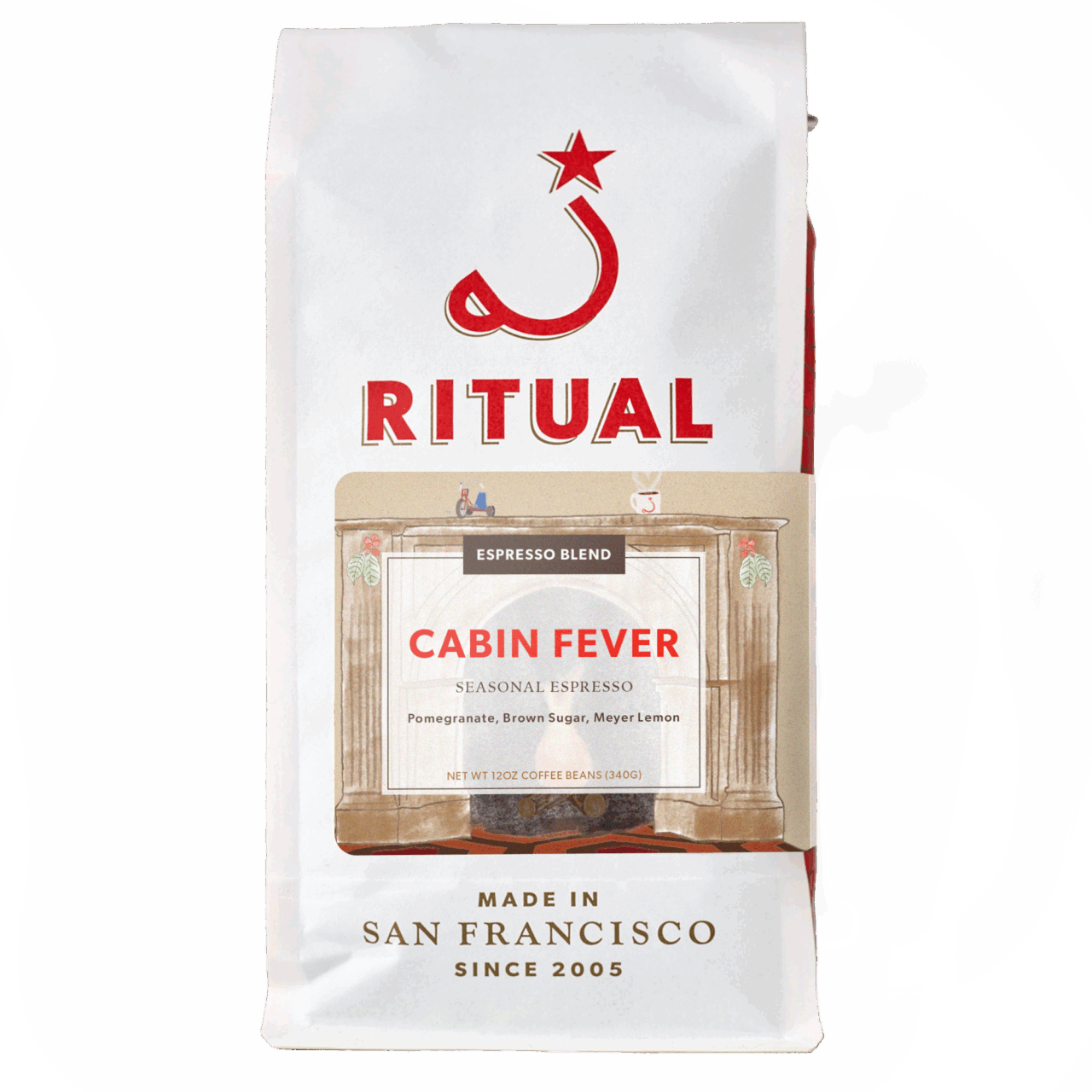
Cabin Fever Seasonal Espresso
Price range: $23.00 through $138.00
This winter, we’re catching Cabin Fever for the 3rd time, after a brief stint in 2012 and a full season in 2017-2018.
It’s officially time to cozy up inside – it’s dark by 5 pm, and the weather is decidedly chilly. But resist the temptation to laze your days away and let this espresso motivate you to make some moves, lest you succumb to cabin fever!
This blend explores the fine line between comfy and crazy, with a taste that’s both familiar and adventurous, all while tipping the hat to our previous cases of cabin fever (and Kubrick’s 1980 classic).
Your caretakers for this winter season are:
El Nevado, Colombia
A community lot from Pitalito and Santa Maria, El Nevado is curated each year to represent the best of what producers in these areas have to offer. Lots go through a rigorous selection process, which focuses on both the quality of processing and the overall flavor. The coffees that make up this lot are grown on the slopes and in the valleys surrounding Colombia’s highest volcano, El Nevado, and farms there sit at an elevation of around 1900 MASL. In the cup you’ll find notes of red fruit and citrus, with a sweet, full body.
Aleta Wondo, Ethiopia
Ethiopia’s Sidamo region is one of the best-known coffee-growing areas in the world. Like the rest of Ethiopia, it’s divided into several woredas (districts) and kebeles (communities) with washing stations throughout—each offering unique terroir. The Aleta Wondo woreda is one of them, and within it lies the Kura kebele.The main income source for Kura producers is coffee, which they grow on very small farms ranging from 0.1 to 2 hectares. They intercrop with false banana trees for shade. In this area, fertilization is nearly non-existent.
In the Aleta Wondo washing station, the coffees are fermented for 48 to 72 hours, depending on climate. The typical temperatures in this area used to reach as low as 32 F at night and 77 F during the day, but in recent years the climate has been rising to reaching 59 F at night and 86 F during the day. This has brought fermentation times increasingly closer to 48 hours than to 72 hours. After fermentation, coffee is dried for 15 to 21 days on solar beds, with frequent turning for even drying.
Rosarios Bajos, Perú
In the region of Piura along the Perú – Ecuador border, there is a private conservation area, Chicuate, which protects several endangered species and forests of this Andean region. Rosarios Altos is a community of several farmers who grow both coffee and sugar cane. Farmers process and dry their coffees on their farms before moving their coffee down the mountain to the nearest towns for export. With notes of dark brown sugar, pomegranate, and molasses, this coffee is rich and sweet.
Sign up for our seasonal espresso subscription – it comes with free shipping!
- Components
- ⅓ Colombia ⅓ Ethiopia ⅓ Perú
- Location
- Pitalito, Huila, Colombia | Kura, Sidamo, Ethiopia | Rosarios Bajos, Piura, Perú
- Variety
- Castillo, Colombia, Caturra, Ethiopia landraces, Bourbón, Typica
- Harvest Season
- Spring & Summer 2025
- Processing Method
- Washed
- Tasting Notes
- pomegranate, brown sugar, meyer lemon
Recommended Brew Parameters
| Dose | 17.5 grams in a "18g" VST or "17g" Strada basket |
|---|---|
| Temp | 198-200 degrees at the group |
| Time | 30 seconds |
| Brewing Ratio | 50-55% or about 30g of liquid |
| Pump Pressure | 8.5-9 Bar or 105-110 psi at the group |
| Days Rested | 7-12 |