Since we began sourcing and roasting coffee in 2007, we have built strong relationships with remarkable people in the coffee industry. As we celebrate our 20th anniversary, we want to share their stories with you. Ritual has worked closely with Red Fox Coffee Merchants for 11 years to buy coffees from Ethiopia, including Kolla Bolcha. Aleco Chigounis, Red Fox’s founder, shared some words on what makes this coffee so special.
If you had to distill Red Fox’s goal or mission into a few sentences, how would you describe what you all do?
Red Fox’s mission has several facets built around our biggest strengths: the team’s collective experience managing coffee supply chain logistics top to bottom, our deep roots at origin via Red Fox Sourcing Company, quality assurance from the lab through the dry mill, and customer service.
Our business is laden with risk that we measure and (hopefully) mitigate on a daily basis. To be successful, we need to be as fluid as possible navigating our supply chains. No monolithic ideals.
Red Fox’s goal is to increase the value of each producer’s coffee for them, whether it’s buying parchment directly, or participating in building competitive markets for coffee cherry and exportable green. We have an acute ability to procure information and share it with our customers on a real time basis. The critical mass culminates in delivering on the value proposition to our customers. It’s essential that Red Fox exceeds, or at the very least meets, expectations when it comes to quality versus price and timely delivery.
Describe your ideal coffee – what are you looking for on the table?
I love coffees that have pristine clarity to them. There are so many compelling flavor profiles in our world. I want to perceive each of them in as flawless a way as possible. No shade to the many interesting processes continually introduced at farms across the producing world, but my ideal coffee is the product of perfect cherry selection, extended fermentation, thorough washing and slow drying. It doesn’t matter if that’s an SL-9 from Puno, a sweet, clean Caranavi, a top lot from Nyeri, a peak harvest lot from one my favorite sites in Gera or anywhere else as long as the process comes correct in the cup. I personally couldn’t care less if that’s somebody else’s 85 point coffee or 90+. Potential maximized is not only delicious, it’s inspiring.
How does Red Fox go about choosing coffees in Ethiopia – can you describe your process a bit?
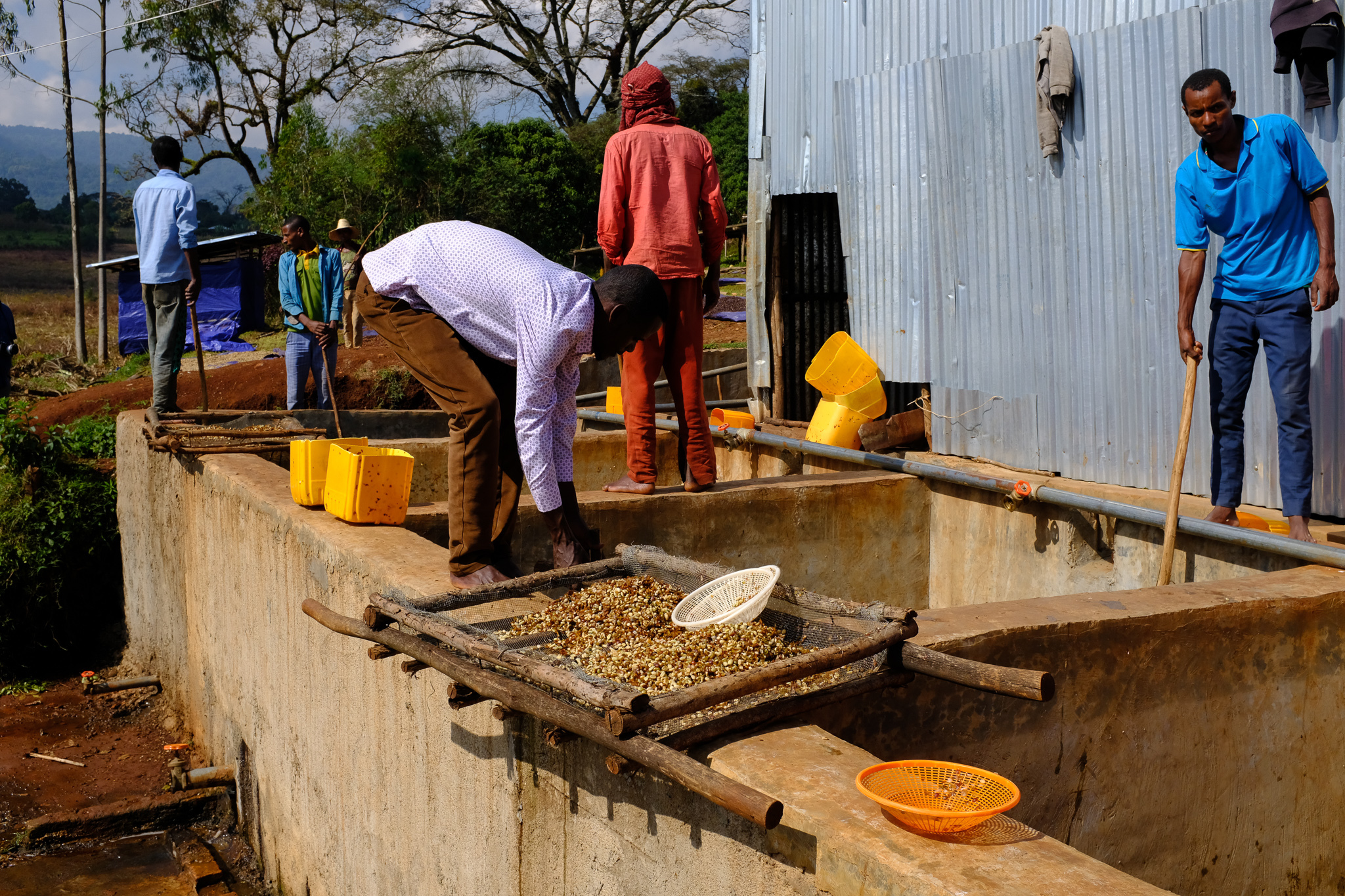
Ethiopia is primed with gorgeous coffee. You could effectively throw a dart at a map of Southern / Western Ethiopia and head that way. So it’s really about the people. As it always is. To work in the higher end of the specialty market means to have an appetite for investment and for risk. Working with folks that we trust is therefore more important than virtually anything else. Nowhere is that more critical than here, where bureaucracy can turn a contracted March shipment into a late fall arrival. Or a bad day in the dry mill can turn a 90 point coffee into something you wish you hadn’t purchased. Who are you working with? It should be the redundant question in each of our conversations.

What stands out to you about coffees from Agaro – what sets them apart for you, why did you want to expand your position there?
Agaro coffees can be stunning; some of the best washed coffees on the continent. Their aromatics are honeysuckle-y in nature with a very unique candied ginger / candied fruit sweetness that comes in waves behind it. I think Turkish Delight when cupping my favorite lots from Kolla Bolcha, Nano Genji, Duromina & Yukro every year.
While the flavor profile is unique, it’s not what interested me most in terms of wanting to grow within the region. That idea was more predicated on being one of the very first specialty buyers on the ground in Agaro almost 20 years ago and witnessing the work that was being done to give coffee farmers a greater opportunity to generate more income for their coffee. Technoserve, with one of my best buds Chris Jordan at the helm in East Africa, started building coffee washing sites across Limu in areas that historically produced only Djimmah-5 naturals—some of the lowest quality, commercial grade coffee on the continent. Coffee that has very little value in the international market. The coffees of Gera & Gomma were quite literally lost in the mix making them egregiously undervalued. The emergence of the TNS Project, and these new sites, created a new reality for coffee farmers across Agaro. I was sold and have never looked back.
Couple these ideas with the fact that the Western Ethiopian harvest begins and ends about a month or so earlier than the South, and you have an equation for early shipments which translates to masses of happy roasters with fresh Ethiopian on their menus come spring. The math continues to add up for us on an annual basis.
What are the biggest changes you’ve seen in your time in coffee, and what are you hoping to see in the next few years?
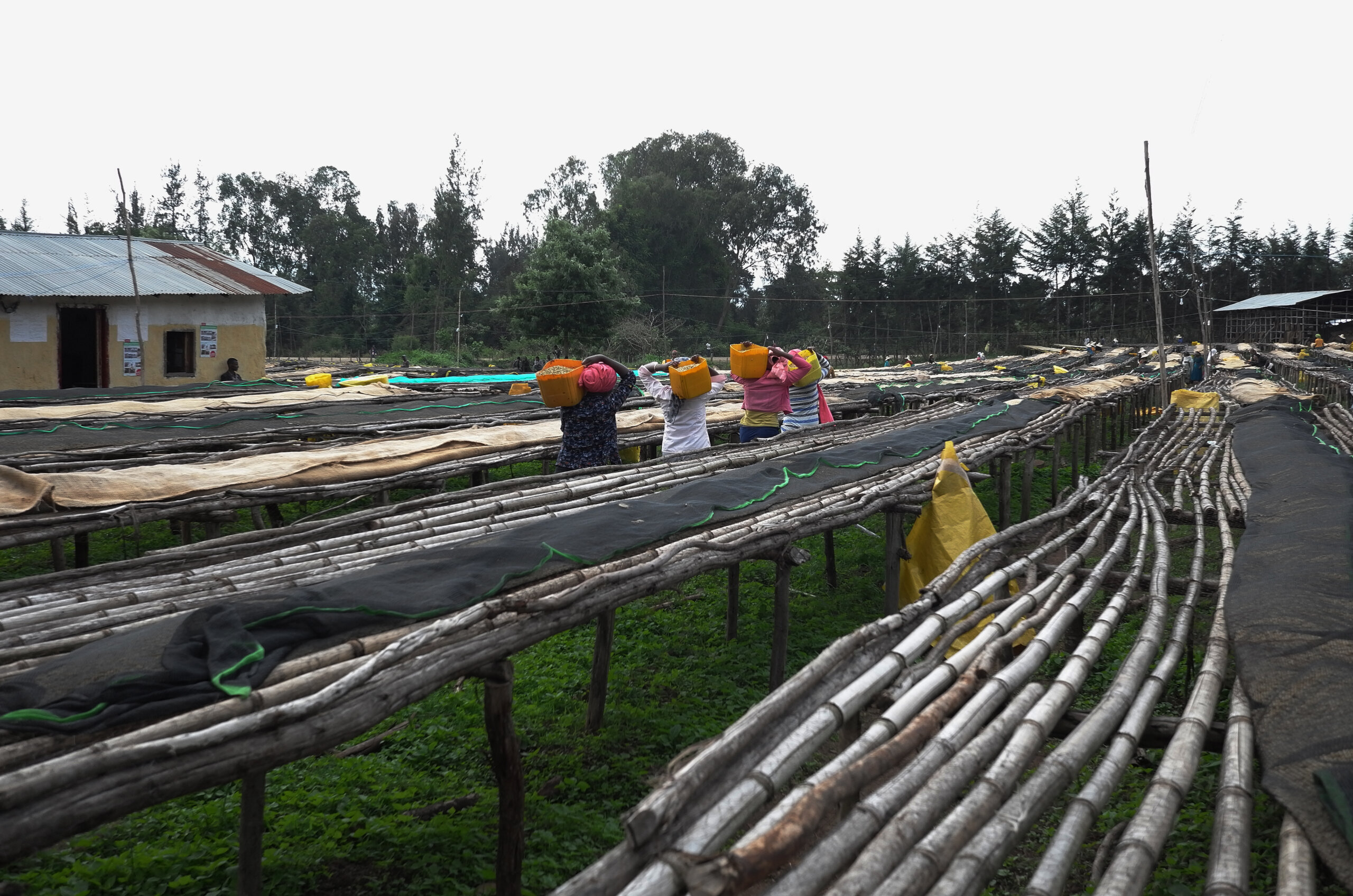
It’s hard to pick one honestly. The glaringly obvious choice as I type are the effects of climate change. Over and over again producers are telling us that it’s impossible to plan for what’s coming at them next weather-wise. Will it be drought this year? Prolonged rains? It is increasingly more difficult for coffee farmers, especially the less technically advanced smallholder farmers, to produce high quality coffee, whether they encounter issues during the maturation cycle, during harvest or through the drying period. We are currently experiencing heavy rains persisting months (plural) into what should be the dry season. The rains not only inhibit the ability to dry parchment properly but also knock coffee cherry off of the trees. It creates a larger instance of mold and phenol as well. And this is just the current season in Peru.
Producing good, clean coffee is as difficult as it’s ever been and there is no respite in sight.
I hope to see greater symbiosis between roasters and producers. One where evolving realities at origin are met and quality is rewarded properly, but where relationship history is also recognized and accounted for. The future of delicious coffee for all parties hangs in the balance.
What is your personal coffee ritual? How do you like to prepare coffee for yourself each day?
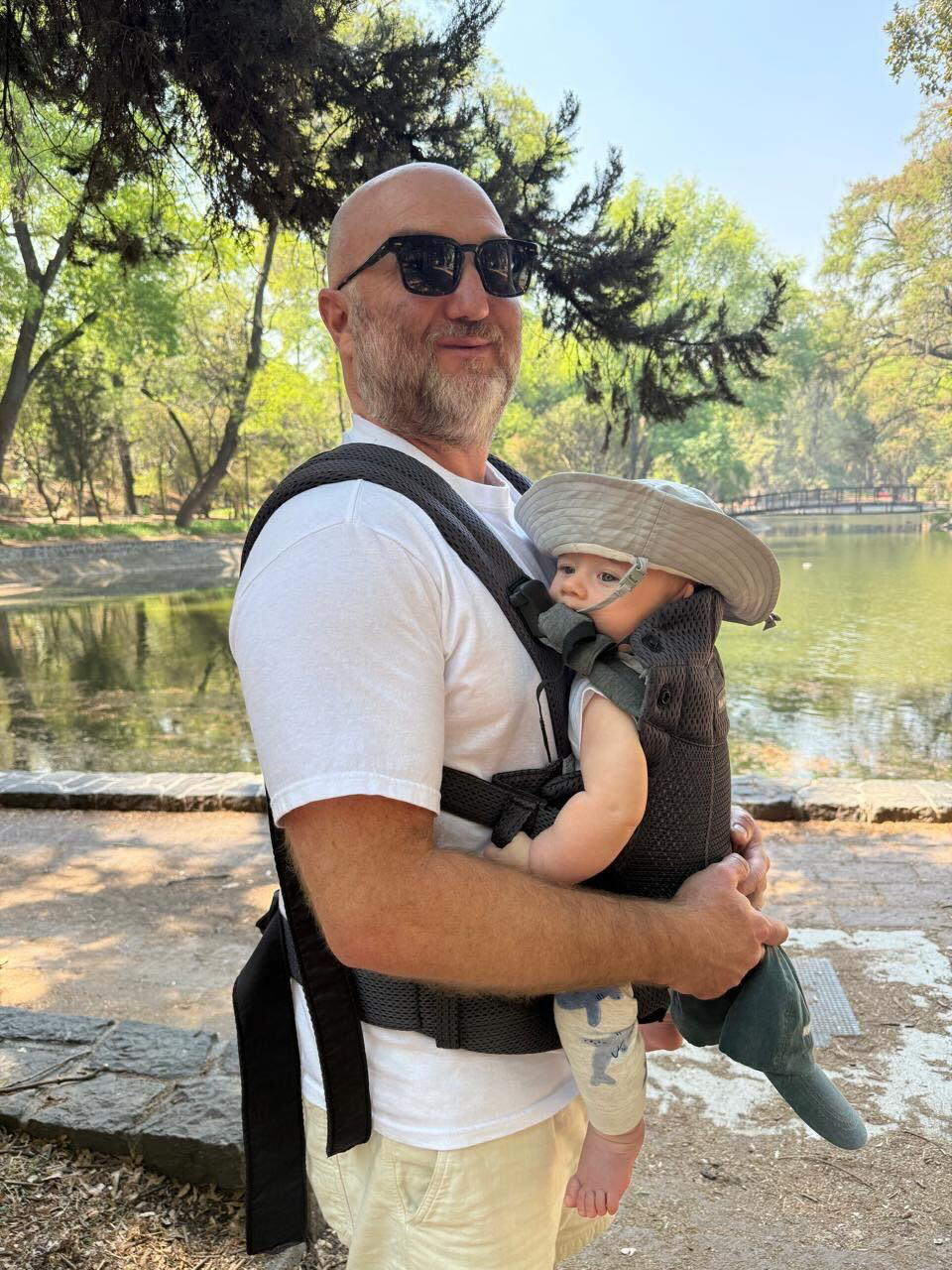
I make coffee for Ali and myself as soon as I get up. Spending the early mornings with her and Massimito is easily the best part of my day. And that first cup is still my single, favorite beverage. I enjoy the ease and consistency of our Ratio 6. At some point between 6-6:30am I am grinding whatever we’ve brought back to Lima—typically heavy on the East African stuff as they taste extra special knowing we can’t get them down here—or purchased from one of the handful of up and coming roasters in the city. I play on the floor with Massimo until the coffee is cool and ready to sip. He’s into West Coast Sound these days so we typically have some Chet Baker, Stan Getz or Dave Brubeck going in the background. Pretty fucking cool.