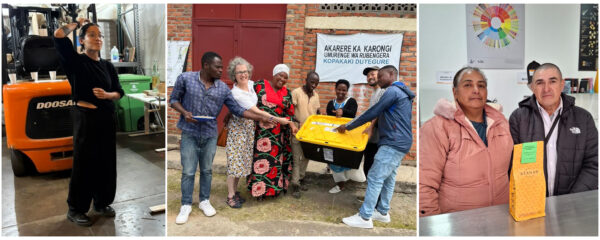
We’re excited to promote the amazing work of our Colombian exporter, Azahar and their non-profit Manos al Grano with this season’s offering of Recolectores. Coffee companies don’t often mention the role of exporters and pay along the supply chain, so this is an opportunity to talk about where your coffee really comes from – and the work that Manos al Grano is doing to make their coffee more fair, sustainable, and higher quality.
Overview:
- What does an exporter do?
- What’s special about coffee in Colombia?
- What is Azahar doing?
- What does Manos al Grano do?
- How does this coffee support the farmers and pickers?
- Why are we so excited about Proyecto Recolectores?
What does an exporter do?
Exporters are the companies and people who purchase the coffee – fully processed or in cherry – from producers, co-ops, or farm managers and facilitate shipment out of that country.
We work with both exporters and importers to get coffee to us in every region we buy coffee. In Colombia, we almost exclusively work with one exporting company – Azahar Coffee.
Azahar started twelve years ago as a roaster and cafe in Bogotá.
What’s special about coffee in Colombia?
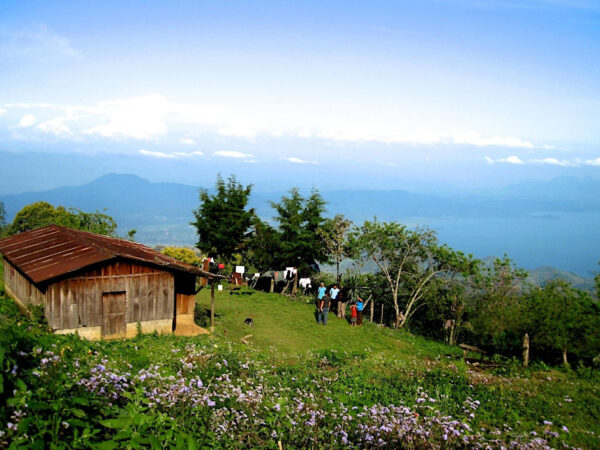
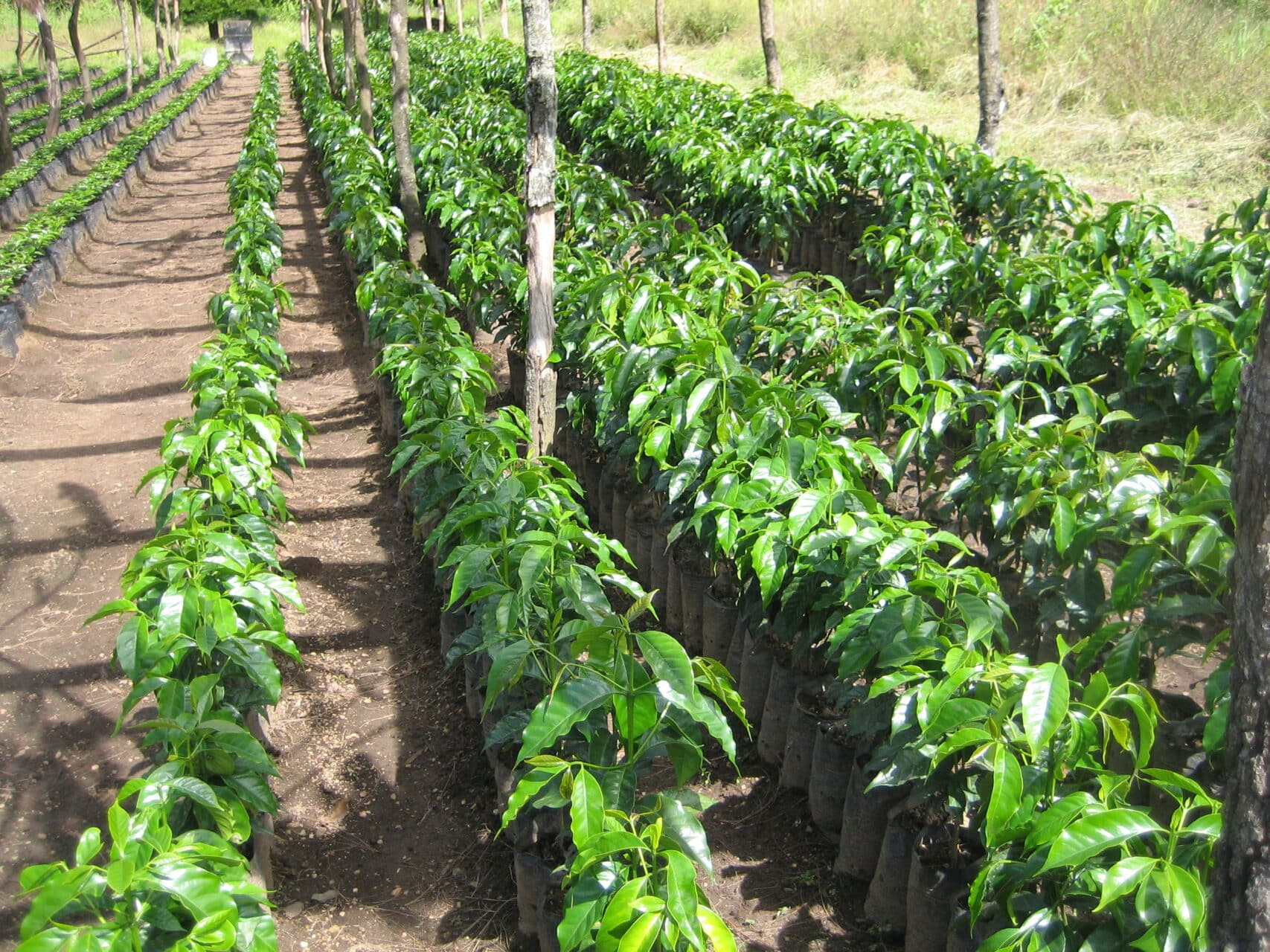
To say that Colombia has a reputation for coffee would be a severe understatement. Most commodity coffees from companies like Dunkin’ Donuts (owned by Green Mountain) buy up huge amounts of Arabica coffee from Colombia to create their blends. In the specialty coffee world, Colombia was well marketed territory by the time Azahar started – there were companies based out of Huila (a very well known coffee region) that promised to provide roasters with relationships to the producer’s of the highest quality coffees. Colombian coffee was suddenly everywhere. A once under-appreciated coffee region was getting its recognition for having some of the most complex and beautiful coffees – and because Colombia is situated so close to the equator – these coffees are available and fresh almost year round.
What is Azahar doing?
What made Azahar stand out, though, was that they wanted to change the way coffee is exported and sold to consuming countries. Working with existing community cooperatives in Huila and Nariño, they have been able to create a new standard for building relationships in communities around Colombia and provide more transparency to roasters buying their coffees.
In 2019, Azahar released their Sustainable Coffee Buyer’s Guide at the Specialty Coffee Association expo in Boston. This guide sought to collect data from coffee producers across Colombia to give insight into the real costs of running a coffee farm, and what prices would create actual impact into producer’s lives. They created tiers of price per bag data that classified income from “poverty level income” to what they call “prosperous level income.”
By the next year, coffee prices were in peril because of the pandemic, but Azahar kept working on their commitment to improve consumer’s understanding of value in coffee.
One of Azahar’s main goals was always to figure out better ways to contribute to farmer’s incomes – but as they were going along in their research, they noticed that they had solely focused on the farmer themself, and not been inclusive of the workers on the farms – the coffee pickers.
Coffee pickers in Colombia were not being contracted as legally registered workers – so they often had no clarity or consistency in their payment structure. In 2017, Azahar started to do some pilot programs on larger farms where they would help facilitate registering the yearly contracted coffee pickers on the farms as workers with the Colombia Employment Board, which would allow them to qualify for sick pay and paid time off as well as overtime and a regular schedule.
By 2019, they had more people interested and then created their non-profit, Manos al Grano.
Producers were interested, but hesitant – when I spoke with Vera Espíndola Rafael, Azahar’s Strategic Initiatives Director, she broke it down for me like this:
Every year the producers run into the same issues with cash flow. Oftentimes, they are paid once or maybe twice a year. If the money they are getting for their coffee isn’t sustainable for them, they often have to turn to loans to sustain during the offseason. And, if they want to contribute to improving their farm, it’s just not possible – oftentimes there’s a huge bottleneck in how they are able to live off of what they make from coffee alone. So, there is a real barrier for them to pay pickers on a consistent basis rather than by the day or quantity.

What does Manos al Grano do?
Azahar’s non profit pays the workers their legal wage along with their benefits – the producer/farmer does not pay them out of their income for the year. The producer might see an increase in the overall price for their coffee because the pickers involved in the program go through extra training and they might see more quality cherries being brought in at the end of the day. Manos al Grano also provides pickers with hazard training as well as gear to be able to work safely on the farms, and their team members provide support during harvest to both the farmers and the farm workers.
When talking about the impact, Vera mentioned that the biggest change she’s heard from people involved is the assurance of having work from week to week. The program works to provide monthly schedules so people know how much to expect to make during the harvest season. One of the main goals is to try to relieve the uncertainty, and because of word of mouth in these communities – they have seen a huge increase in people signing up to become legally registered pickers and coffee farmers who want to work with this program.
How does this coffee support the farmers and pickers?
To break it down by what money goes where: when we purchase this coffee we purchase it through both Azahar and Manos Al Grano – which means that the money we pay them gets split up between the non-profit paying the pickers and the exporter paying the farmer. It’s all one cost for us, but gets divided within Colombia.
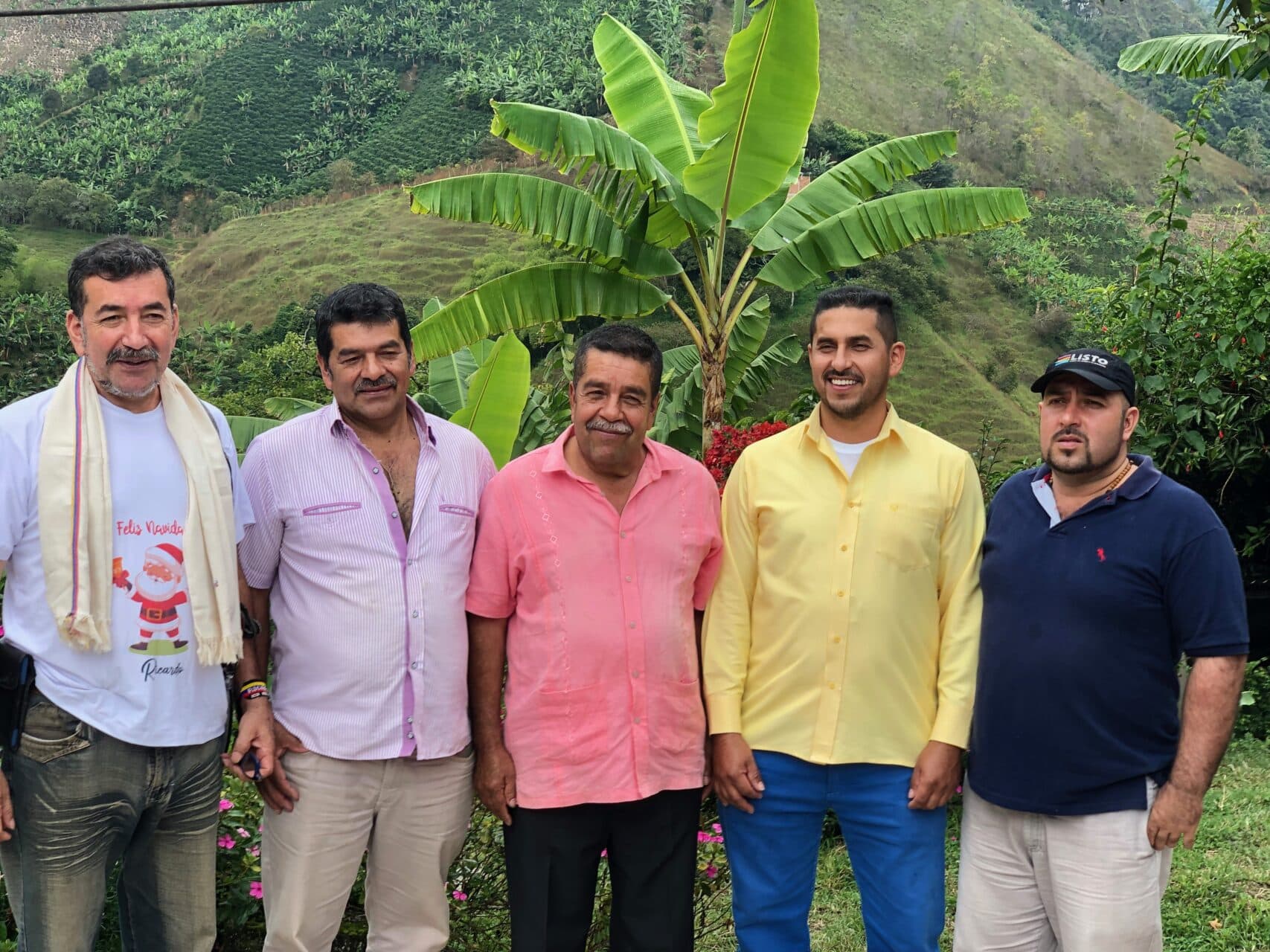
Why are we so excited about Proyecto Recolectores?
We hope that by having this coffee on our menu we get to continue having these conversations about how coffee as a global industry really works – and we can learn how to look at our practices and figure out what we can improve on.
With consistent wages for pickers, we expect to see coffee quality continue to improve in tandem with working conditions. And by investing in this coffee, we’re choosing a system that’s better for everyone that contributes to your coffee. We’re excited to share Recolectores with you and we can’t wait to hear what you think.
For any questions, please email us at info@ritualcoffee.com